
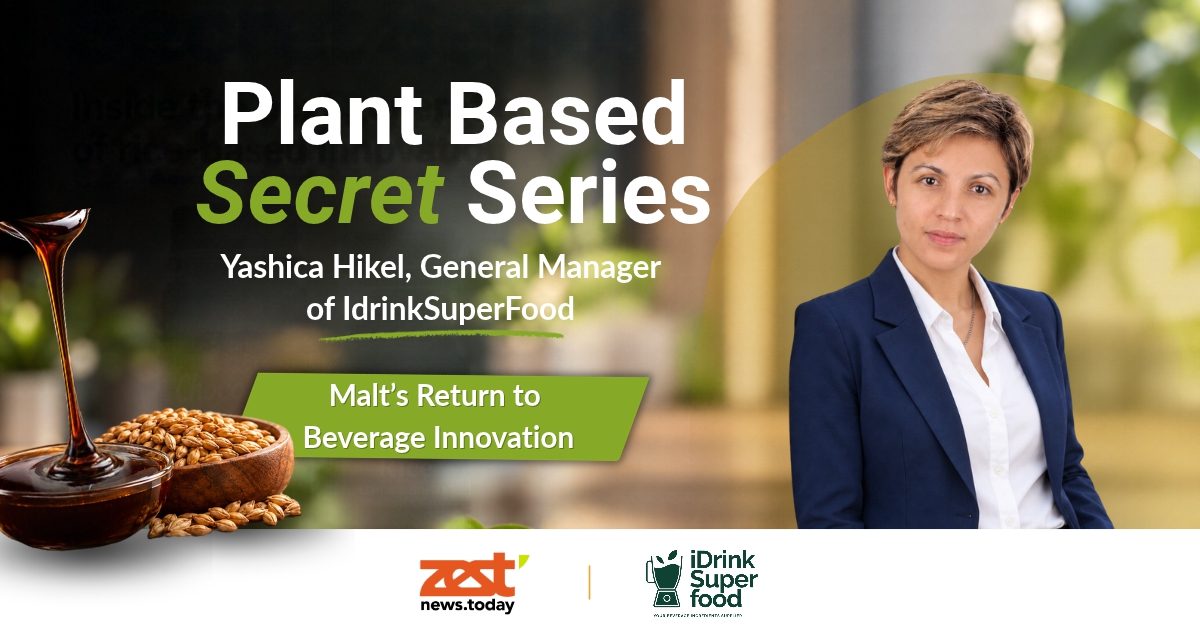
Malt has been part of beverages for generations, but many manufacturers may not know what goes into it. What exactly is malt concentrate, and what makes it different from other beverage bases?
It starts with barley, one of the oldest grains we have. When barley is malted, the grain wakes up: it begins to sprout, and in doing so it unlocks its own natural sugars and that unmistakable warm, toasted aroma. What we do is take that malted grain and, with just water, gently extract and concentrate what is inside it, until it becomes a thick, dark liquid at around 65–70° Brix.
Nothing else goes in. It is 100% grain.What makes it unique is that malt is not only a base, it is a flavour. Oats and rice give you a smooth, mild canvas to build on. Malt gives you character from the very first sip: rich cereal and caramel notes, a natural golden-to-brown colour and real body in the glass. Many of the drinks people remember from childhood taste the way they do because of malt.
From Ovaltine to Horlicks, malt has built some of the most iconic drinks in the world. Why does it work so well in a beverage?
I think it comes down to four things happening at once. First, flavour: malt has a signature taste that consumers recognise instantly and come back for. Second, sweetness: it brings a gentle, rounded sweetness of its own, so a brand can rely less on refined sugar. Third, colour: that natural golden-brown shade comes straight from the grain, with no need for caramel colouring. And fourth, body: malt gives a drink a fuller, softer mouthfeel, so it doesn’t feel thin or watery.
Usually a manufacturer needs several ingredients to get all four of those. With malt, they come together in one.
Everyone in the food industry is talking about «clean label». What does that mean in practice for malt, and what does the consumer get out of it?
For malt it is very simple. Malt extract is a food ingredient, not an additive, so it has no E-number. On the pack it just reads «barley malt extract», something most people already know from their kitchen cupboard. And because our concentrate is made only from grain and water, there are no added sugars, oils, stabilisers or flavourings hiding behind that name.
For the consumer, that means a drink whose taste, colour and sweetness all come from a real cereal, with a short ingredient list they can read and trust. Malt also brings a little more to the glass than sugar alone would, with some protein and fibre from the grain.
What types of malt concentrate are there, and how does a manufacturer choose the right one for a drink?
We work with two, and the choice really depends on the drink you are imagining.
The first is our Gold malt concentrate. It is lighter in colour and more neutral in flavour, so it is perfect when you want the softness, body and gentle sweetness of malt without it taking over: malted milk drinks, dairy and plant-based beverages, coffee and cocoa drinks.
The second is our Dark, a double malt concentrate. This one is intense: deep dark colour, caramel and toasted notes, and a bit more fibre and protein. It is the one we recommend for malt sodas, chocolate drinks and brewing, where you want malt to be the star.
Many customers try both side by side in their recipe. It is the quickest way to see which personality suits their brand.
Can you share some success stories? Which beverage brands are already winning with malt?
Malt is probably the ingredient with the longest list of success stories in the drinks aisle. Think of Ovomaltine in Europe, where barley malt extract is the main ingredient, around half of the recipe. Or Horlicks in the UK, the classic bedtime drink, and Ovaltine in the US. Nestlé’s Carnation Malted Milk has been the secret behind the American milkshake for generations.
Then there is a whole other world many people in Europe don’t know: non-alcoholic malt drinks. Brands like Vitamalt are loved across the Caribbean, Africa and Latin America as a naturally energising, family-friendly soft drink.
What all these stories have in common is that malt is not hidden in the recipe. It is the reason people buy the product. For me that is the real lesson: when an ingredient gives a drink its identity, consumers stay loyal for decades.
Where are we most likely to find it today, and what kinds of beverages is it best suited to?
Probably in more places than you think. The chocolate malt drink in your child’s cup, the milkshake at a diner, the malt soda in the fridge of a corner shop.
In beverages I would group it into a few families. Malted milk and cocoa drinks, whether as a powder or ready-to-drink. Malt soft drinks and non-alcoholic malt beverages. Functional and energy drinks, where malt gives natural carbohydrates and a satisfying taste. And more and more, plant-based drinks, where malt adds depth and colour to an oat or rice base.
It also works beyond the glass, in bakery, ice cream or confectionery. But if a manufacturer asks me where malt really shines, I’d say: in a drink.
You mentioned plant-based drinks. How does malt work together with oats or rice?
This is one of my favourite combinations, and it is a natural one, because they are all cereals. An oat or rice drink is smooth and mild, and sometimes brands want it to taste a little richer, a little more «grown-up». A small amount of malt does exactly that. It brings toasted, biscuity notes, a warmer colour and more body, without adding anything artificial.
Think of a malted oat latte, a chocolate-malt rice drink, or a barista oat drink with a hint of caramel that comes from the grain and not from a syrup. It is a very easy way to make a plant-based drink stand out, while keeping the label just as clean.
To finish, what would you say to a manufacturer who is thinking of trying it, and how can they get started?
I’d say start with a sample and taste the difference in your own recipe. We can send you our Gold or Dark malt concentrate on its own, or create a formulation for you that combines it with oats, rice, cocoa, coffee or any flavour you have in mind. We can supply it either as a concentrate or as a ready-to-drink product. To request samples or place an order, just write to us at sales@idrinksuperfood.com
Read more at © ZestNews.Today
https://zestnews.today/news/plant-based-secrets-series-malt-s-return-to-beverage-innovation.html